How to Obtain an Official Translation of Documents Easily?
Obtaining an official translation of documents can seem daunting. Many people find the process confusing and time-consuming. However, understanding the steps involved can simplify things significantly. Knowing where to start is crucial.
Official translations of documents are necessary for various purposes, such as visas and legal matters. These translations must be precise, as even minor errors can lead to significant consequences. It's essential to choose a reliable translator or service specializing in official documents. Experience in dealing with authorities adds confidence.
Numerous services are available online. However, not all are equally trustworthy. Researching reviews and credentials can help you find a reputable provider. Take the time to evaluate options carefully. Reflect on past experiences and learn from them. In this way, obtaining an official translation of documents becomes a more straightforward and less stressful experience.

Understanding the Importance of Official Document Translation
In an increasingly globalized world, the importance of official document translation cannot be overstated. Many individuals find themselves needing translated documents for various purposes. Whether it’s for immigration, education, or legal matters, accuracy is crucial. A misinterpretation can lead to serious consequences, including rejected applications and legal disputes.
Professional translators have the expertise in specialized terminology. They understand the nuances of legal language and cultural context. However, not all translators possess the same level of skill. It is essential to choose a qualified translator or agency. Verification of credentials is key. Credentials give an assurance of reliability and expertise, which is vital in official matters.
Despite advancements in technology, some may still rely on machine translation. This method can lead to errors. Machine translations often lack the depth of understanding that human translators provide. Inaccuracies can arise from literal translations that miss cultural significance. Thus, the need for official translations remains critical. It’s recommended to consider not just the cost, but also the quality and credibility of the services. Efforts to ensure accuracy and professionalism in translations reflect a commitment to effective communication and understanding in our interconnected world.
How to Obtain an Official Translation of Documents Easily? - Understanding the Importance of Official Document Translation
| Document Type |
Importance of Translation |
Common Use Cases |
| Birth Certificate |
Required for legal identification and citizenship applications. |
Passport applications, immigration processes. |
| Marriage Certificate |
Essential for legal recognition of marital status. |
Visa applications, family reunification. |
| Academic Transcripts |
Important for further education and employment verification. |
University admissions, job applications. |
| Legal Documents |
Necessary for court proceedings and legal compliance. |
Divorce cases, contracts, and agreements. |
| Medical Records |
Vital for treatment abroad and cross-border healthcare. |
Traveling for medical purposes, international health insurance. |
Identifying the Types of Documents Requiring Official Translation
When it comes to official translation, understanding which documents require it is crucial. Common items include birth certificates, marriage licenses, and academic transcripts. These documents often play significant roles in legal and educational contexts. For instance, if you are applying for a job abroad, your degree might need translation.
In addition to personal documents, legal papers also require official translation. Contracts, court documents, or immigration papers often fall into this category. They must be precise to avoid misunderstandings. Even small errors can lead to serious consequences. It’s a reminder that every detail counts in translation.
Not all documents need an official translation. Casual items, like personal letters or non-official records, usually do not require this service. Yet, ambiguity can arise. If you're uncertain about a document's status, consult with a translation expert. They can provide guidance tailored to your specific needs. Understanding these nuances helps prevent future hassles.
Choosing the Right Translation Service Provider
Choosing the right translation service provider is crucial for obtaining an official translation of documents. Not all services are created equal, and the right choice can save you time and hassle. Look for providers with verified credentials, solid customer feedback, and a track record in your specific language pair.
Tips: Always check for industry certifications. A reputable provider should have a translator with qualifications relevant to your documents, such as legal or medical expertise. Experience matters; translators familiar with your subject matter can avoid costly errors.
Consider turnaround times and pricing structures. An overly cheap option might compromise quality. Yet, high prices don't guarantee excellence. Balance quality with affordability by reviewing multiple quotes. When making a decision, ensure clear communication with your provider. Ask questions, and don’t hesitate to seek clarification on their processes. This leads to a smoother translation experience.
Overview of Document Translation Services
This chart illustrates the percentage distribution of different types of documents that require official translation services. The data reflects common document types requested by clients seeking translations.
Preparing Your Documents for the Translation Process
Preparing documents for an official translation is crucial for accuracy and efficiency. The first step is to gather all relevant documents. Ensure they are complete and unaltered. Any missing pages can lead to confusion. A recent report from the Global Translation Industry shows that 30% of translation errors stem from incomplete documents.
Next, consider the format of your documents. Translations require clear, legible text. Scanned or handwritten notes can introduce mistakes. According to industry standards, documents should ideally be in PDF or Word format. This helps translators provide precise translations. However, many still submit poor-quality scans, affecting the final product.
Organizing your documents is another key aspect. Group related documents together to streamline the process. This can reduce turnaround times. In fact, studies show that well-organized documents can speed up the translation process by up to 40%. It's also critical to note any specific terminology or context that might influence the translation. Working with a reliable professional can ensure your documents are prepared correctly.
Ensuring Quality and Accuracy in the Translated Documents
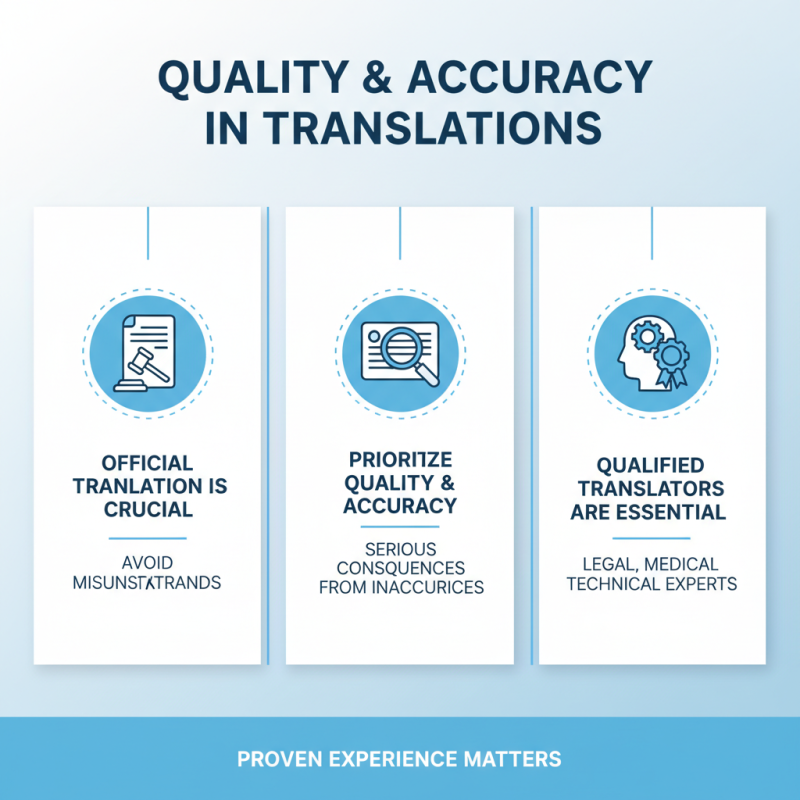
Obtaining an official translation for your documents is crucial. Ensuring quality and accuracy in these translated documents should be your top priority. Inaccurate translations can lead to serious misunderstandings. Therefore, it’s essential to use qualified translators who specialize in your document type. Look for professionals who have proven experience in legal, medical, or technical translations.
Here are some tips to ensure quality. Always request a translator's credentials. Check their qualifications and past work. This will help you gauge their expertise. Furthermore, consider seeking recommendations from trusted sources. A strong referral can lead you to reliable translators. Be clear about your requirements and deadlines. Miscommunication can cause delays and affect the quality.
Do remember that not all translations are perfect. Mistakes can happen, even with professionals. It’s wise to review the final document carefully. If possible, have a second opinion from another expert. This step can help catch any errors before submission. Quality assurance is key to the success of your translated documents, and your attention to detail will help in minimizing issues.