How to Choose the Best Video Translation Software for Your Needs?
Choosing the right video translation software can greatly enhance your projects. In today's globalized world, clear communication is essential. With many software options available, the selection process may seem overwhelming. Each solution offers unique features and caters to different needs.
When exploring video translation software, consider your specific requirements. What languages do you need support for? Is accuracy or speed more critical for your projects? Reflect on how user-friendly the interface is. Complicated software can slow you down. Furthermore, not all software handle various video formats equally. Some may offer excellent subtitle integration, while others shine in audio translation.
Take time to evaluate reviews and compare tools. You might find that what works for one, may not work for another. The right choice will save you time and improve your output quality. Testing a few options can provide valuable insights. Choosing video translation software isn’t just about features; it’s about finding a solution that meets your unique needs.

Understanding Your Video Translation Needs and Goals
Understanding your video translation needs and goals is crucial before choosing software. Start by assessing your target audience. Are they non-native speakers? Do they require subtitles or voiceovers? Each option serves different purposes. Knowing your audience shapes your translation needs.
Next, consider the type of content you create. Is it educational, promotional, or entertainment-based? Different content types may require distinct approaches. For instance, educational videos may benefit from detailed explanations, while promotional ones need catchy phrases. Reflection on these details can guide your choice.
Lastly, be aware of the languages you need. Consider how many languages you want to translate into. Also, think about technical complexities. Some languages have unique characters or tone variations. This could impact how easily your message is understood. Reflecting on these elements helps ensure effective communication.
Key Features to Look for in Video Translation Software
When selecting video translation software, key features can significantly impact your choice. One important aspect is accuracy. Research indicates that 85% of consumers prefer videos with accurate subtitles. This suggests that translation quality directly influences viewer engagement. Ensure the software uses advanced algorithms or AI to enhance accuracy.
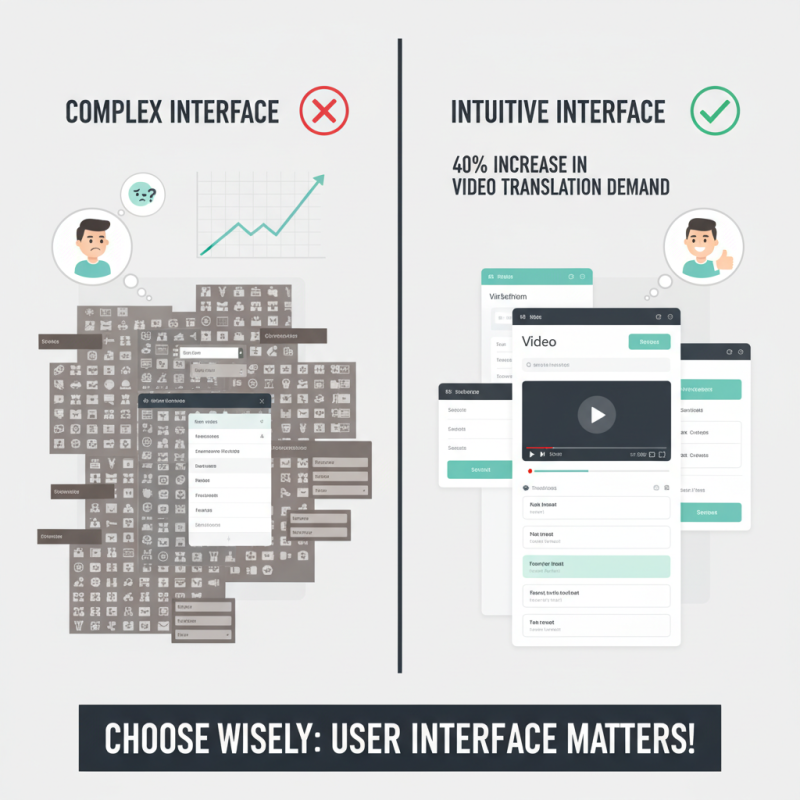
Another crucial feature is user-friendliness. Many users report frustration with complicated interfaces. About 70% of professionals want a straightforward setup process. Look for software that simplifies uploading content and customizing settings. A drag-and-drop interface can save time and reduce errors in the translation process.
Additionally, consider the software's compatibility with various formats. Data shows that 60% of video content is shared on social media platforms, which may use unique file types. Having software that adapts to different formats can streamline your workflow. Keep in mind that some translations may require manual tweaking to maintain meaning and context. This often goes unnoticed in automated systems and might lead to misinterpretation.
Evaluating User Experience and Customer Support
When choosing video translation software, user experience is critical. A simple interface can make all the difference. Look for programs that prioritize ease of use. Users should find it intuitive to upload videos and select translation options. Test the software with a short project. This way, you can immediately see how it handles your needs.
Customer support is equally important. Prompt help can save you from frustration. It’s vital to assess the availability of support channels. Email, chat, and phone support options should be easy to find. Some tools offer extensive documentation and tutorials, which can be very helpful. If you encounter issues, the response time can make or break your experience.
Remember, user feedback is a treasure trove of information. Read reviews from actual users. Pay attention to recurring themes. If multiple users mention poor support or difficulty navigating the software, consider those warnings carefully. It's essential to balance your needs with the capabilities of the software. Sometimes, what looks good on paper may not translate into real-world usability.
Assessing Cost vs. Value in Video Translation Solutions
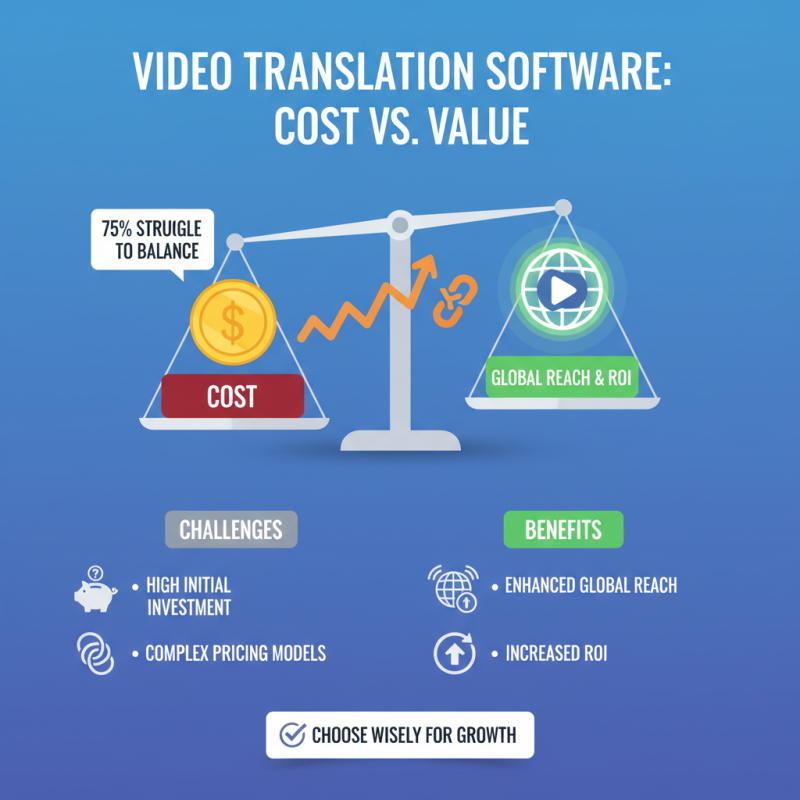
When choosing video translation software, cost and value are often at odds. According to a recent industry report, 75% of companies struggle to balance these two factors. Video translation can significantly enhance global reach. Yet, not every solution offers the same return on investment.
Many tools advertise low upfront costs. However, hidden fees for features and updates can inflate total expenditure. A study by the Global Digital Translation Report revealed that businesses may face costs that are 30% higher than anticipated. This discrepancy often arises when considering quality assurance and ongoing support.
Focusing on value means assessing features against your specific needs. For instance, advanced technologies like AI-driven translations can save time but may require higher initial investments. A firm must consider its growth potential. Would investing in a more comprehensive package yield better long-term results? Sometimes, cheaper options lead to compromises on translation quality, impacting viewer engagement. It's essential to analyze all these elements closely.